Start with a baseline you can explain
Record the enquiries, completed sales and administrative problems your business can measure. Agree what counts as a qualified enquiry and which source information you can collect appropriately. A click on a contact button is different from a completed request that your team can act on.
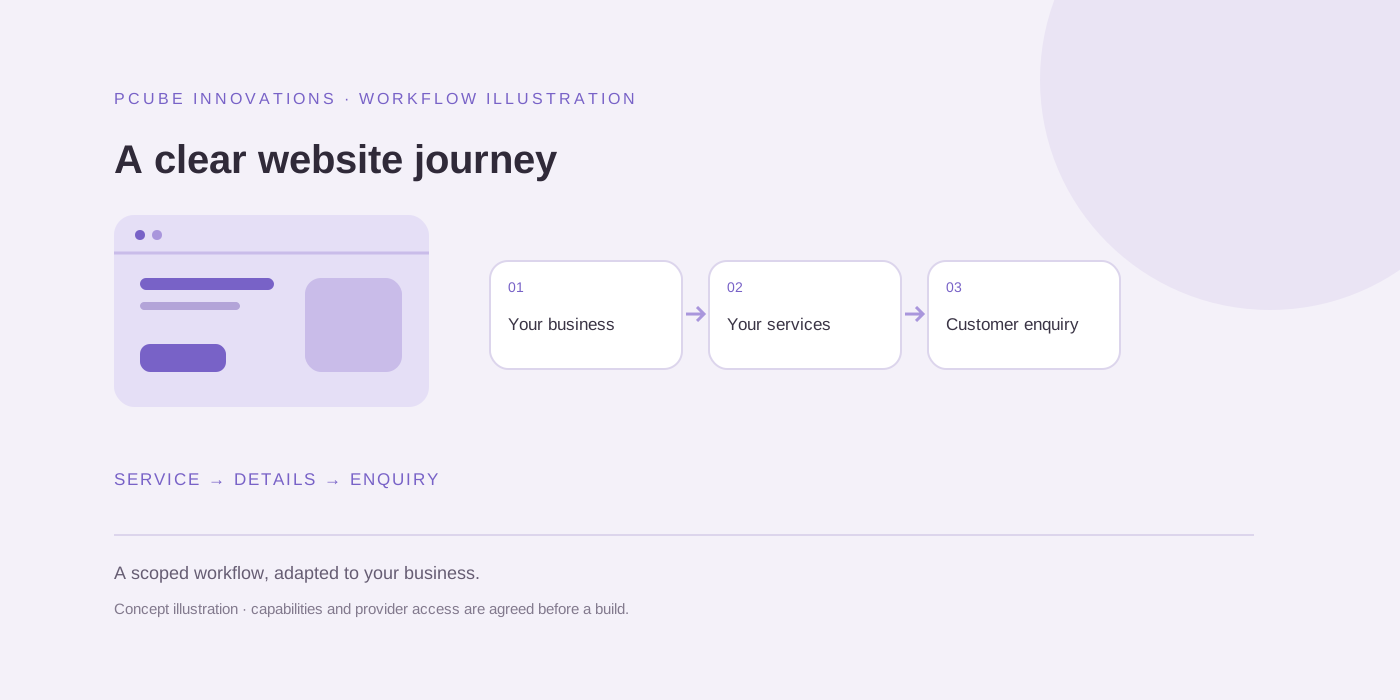
Choose one customer journey to inspect on a phone. Can a visitor understand the offer, find service coverage and send enough detail for a useful response? Fix those barriers before assuming another channel or tool will solve them.
Give every enquiry a next action
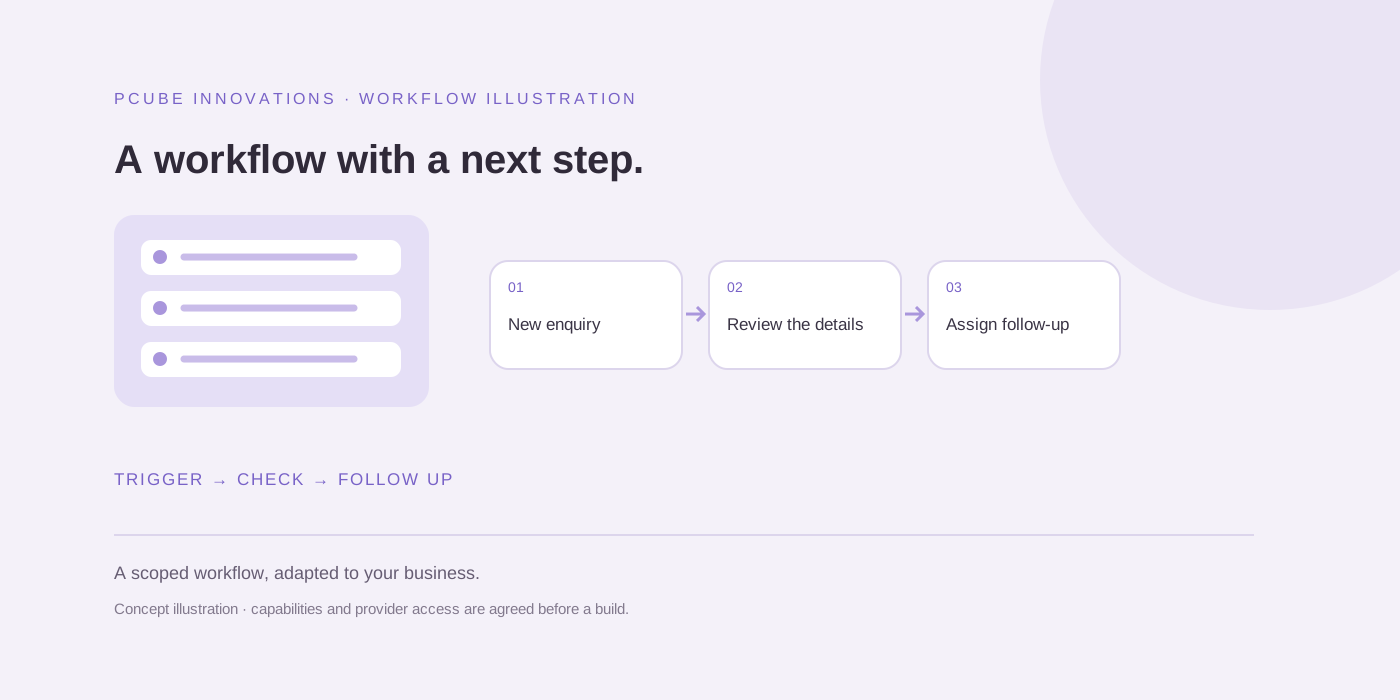
A follow-up process needs an owner, a status and a next step. This can start in a well-maintained existing tool. A custom CRM becomes a discussion when permissions, branches, documents or connected workflows exceed that starting point.
List where enquiries arrive, including forms, calls and messaging. Decide who checks each channel, what information must be captured and when an unanswered request should be reviewed. Software can support this agreement but cannot replace an unassigned responsibility.
Use AI experiments with review criteria
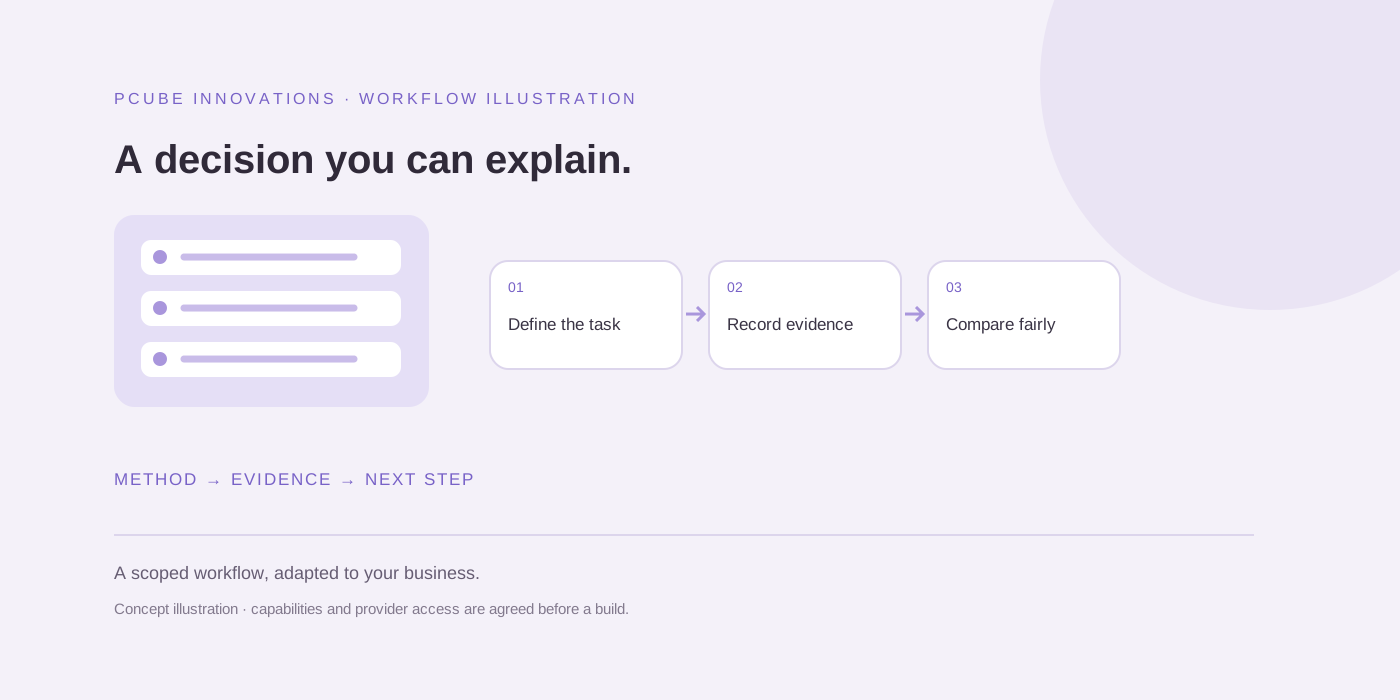
Choose a limited task, representative inputs and a person who can judge the result. An AI draft for a product description or a storyboard is easier to assess when your business has approved facts and a clear style guide.
Set stop conditions: unacceptable factual errors, missing permissions, unmanageable review effort or unexpected usage costs. A pilot can conclude that the existing process is adequate. That is a useful finding rather than a reason to force automation.
Plan delivery and review in stages
Use the worksheet to record the problem, proposed change, owner, required access, estimated budget, approval and review date. Prioritise work by the customer problem and operational cost you can support with evidence.
Review the plan periodically as you obtain real results. A new website, online store or video workflow can be part of the plan, but each needs content, maintenance and someone responsible for the work after launch.
- First establish a baseline and fix a visible customer barrier.
- Then improve the handoff between enquiry and follow-up.
- Pilot one bounded AI or automation task.
- Review completed outcomes before expanding the scope.
Useful questions
Will adding AI increase my income in 2027?
No specific income outcome can be promised. Evaluate a proposed workflow against your current costs, review requirements and actual customer outcomes.
What should I improve first?
Start with a visible problem in the customer journey or team handoff, then choose a change with a clear owner and a measurable review point.
Sources and further reading
Reuse and attribution
You may reuse the original PCube checklist or blank evaluation template under CC BY 4.0 with attribution to this page and a note of changes. Third-party screenshots, logos, quoted material and linked provider content are excluded.
Suggested citation: PCube Innovations editorial. “Your 2027 small business digital plan: sales journeys, useful AI and less admin”. Updated 17 October 2026. https://pcubesolution.com/blog/small-business-digital-plan-2027.