Start with the document or the shared process
If you only need to prepare a branded quote or invoice, PCube’s free document creator can be a useful starting point. It operates on your device and is separate from an accounting ledger or multi-user approval system. Check what the tool does before treating it as a full business application.
A shared workflow becomes a different requirement when staff need customer history, approval roles, accepted versions and an audit trail. Record who can change a draft and what happens when an accepted quote needs a variation.
Keep the accepted version with the work
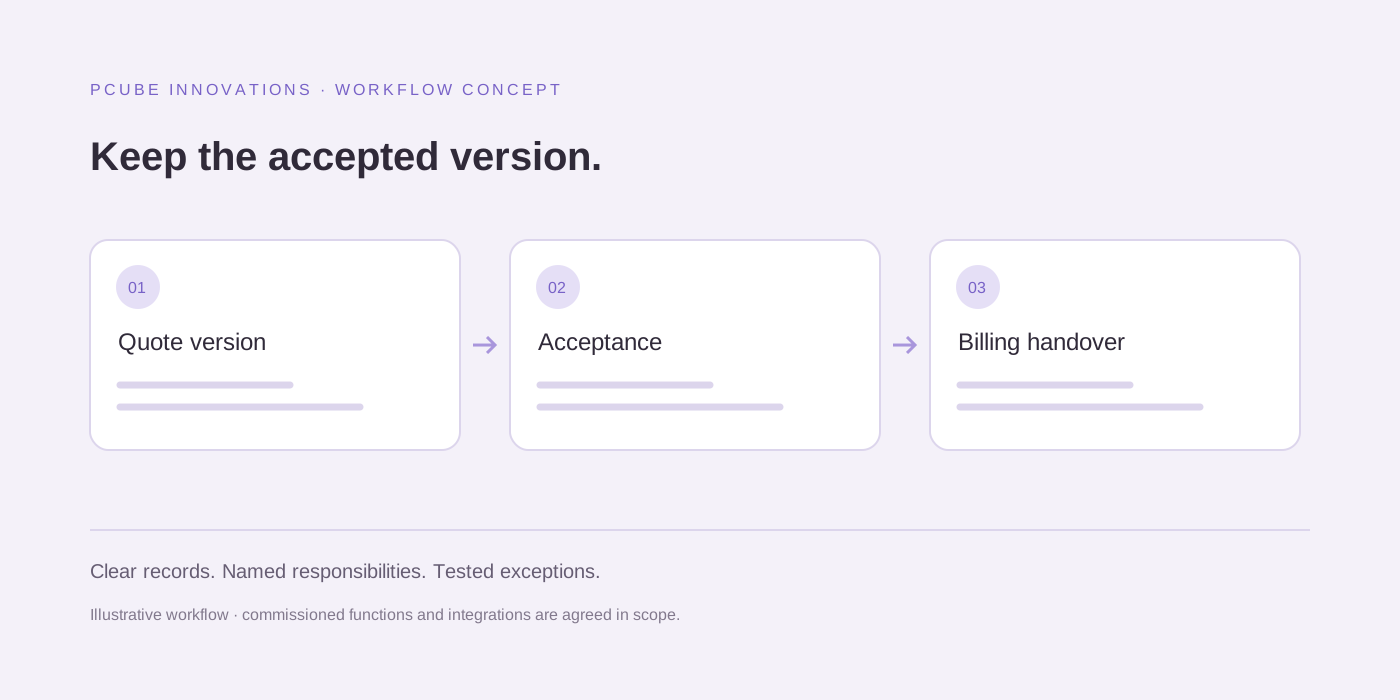
A quote may change while a customer considers the proposal. Preserve the accepted version so a later edit does not silently change the scope used for a job or billing. Define how a revised quotation is presented, approved and linked to the previous agreement.
If billing depends on a delivery or job milestone, keep that decision separate from initial acceptance. An order being scheduled and work being approved for invoicing may be different events. The system should make that distinction understandable to sales, operations and accounts.
Define the accounting handover
Confirm the exact accounting product and interface before promising automatic transfer. Agree the customer reference, line-item mapping, who owns invoice numbering and how a rejected message is reconciled. A repeated retry should not silently create duplicate records.
Accounting, tax treatment and financial reporting need appropriate professional and product support. This guide describes operational handovers; it does not turn a custom quote workflow into a certified accounting system or provide tax advice.
Distinguish supplier invoice processing
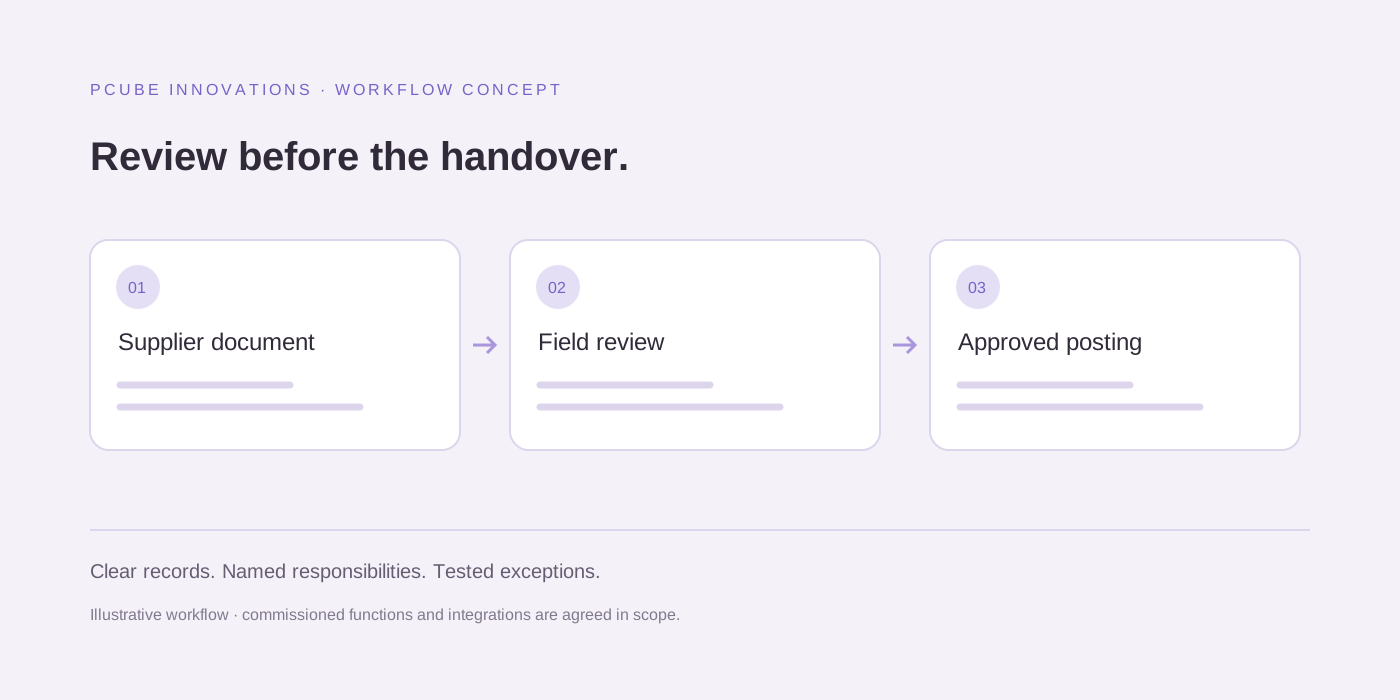
Incoming supplier invoices need document identification, extraction checks, matching and approval. That workflow is separate from creating customer invoices from your own work. They can connect to the same accounting product while keeping different permissions and responsibilities.
Ask PCube to compare a narrow document need with a shared workflow before agreeing development. The written scope should identify current systems, data access, acceptance tests and support. Use the worksheet to make unknowns visible rather than filling them with optimistic assumptions.
Useful questions
Can this guide help us prepare a software development brief?
Yes. Describe your users, records, operating rules, existing systems and exceptions, then use the worksheet to compare available products and a scoped development approach.
Does this guide establish the best product or a fixed market price?
No. This is an editorial decision framework, not a hands-on vendor benchmark or current price survey. Ask suppliers for comparable demonstrations and written quotations for your actual requirements.
Sources and further reading
Reuse and attribution
Reuse the original blank PCube workflow evaluation worksheet under CC BY 4.0 with attribution and a note of changes. Third-party documentation and provider content are excluded.
Suggested citation: PCube Innovations editorial. “Quote-to-invoice software in South Africa: documents, approvals and accounting handovers”. Updated 20 October 2026. https://pcubesolution.com/blog/quote-to-invoice-software-workflow-south-africa.