SOFTWARE AROUND YOUR OPERATIONS
Fleet maintenance software in South Africa
Fleet maintenance software connects vehicle records, due-service rules, reported defects and workshop work orders. PCube can build the operational workflow and assess supported telematics inputs. Maintenance schedules come from your authorised fleet process; this software service does not replace technical inspections or establish a vehicle’s roadworthiness.
Scoped milestones Clear ownership Support agreed upfront
Fleet & Truck Maintenance SoftwareIllustrative
One connected view.The next step, visible.
- 01Record the vehicle and approved maintenance rule
- 02Raise a due service or review a reported defect
- 03Assign workshop work and capture the result
- 04Approve the operational status and retain the history
A CLEAR STARTING POINT
Can we track vehicle servicing and truck maintenance in one system?
Fleet maintenance software connects vehicle records, due-service rules, reported defects and workshop work orders. PCube can build the operational workflow and assess supported telematics inputs. Maintenance schedules come from your authorised fleet process; this software service does not replace technical inspections or establish a vehicle’s roadworthiness.
Discuss Your Software Workflow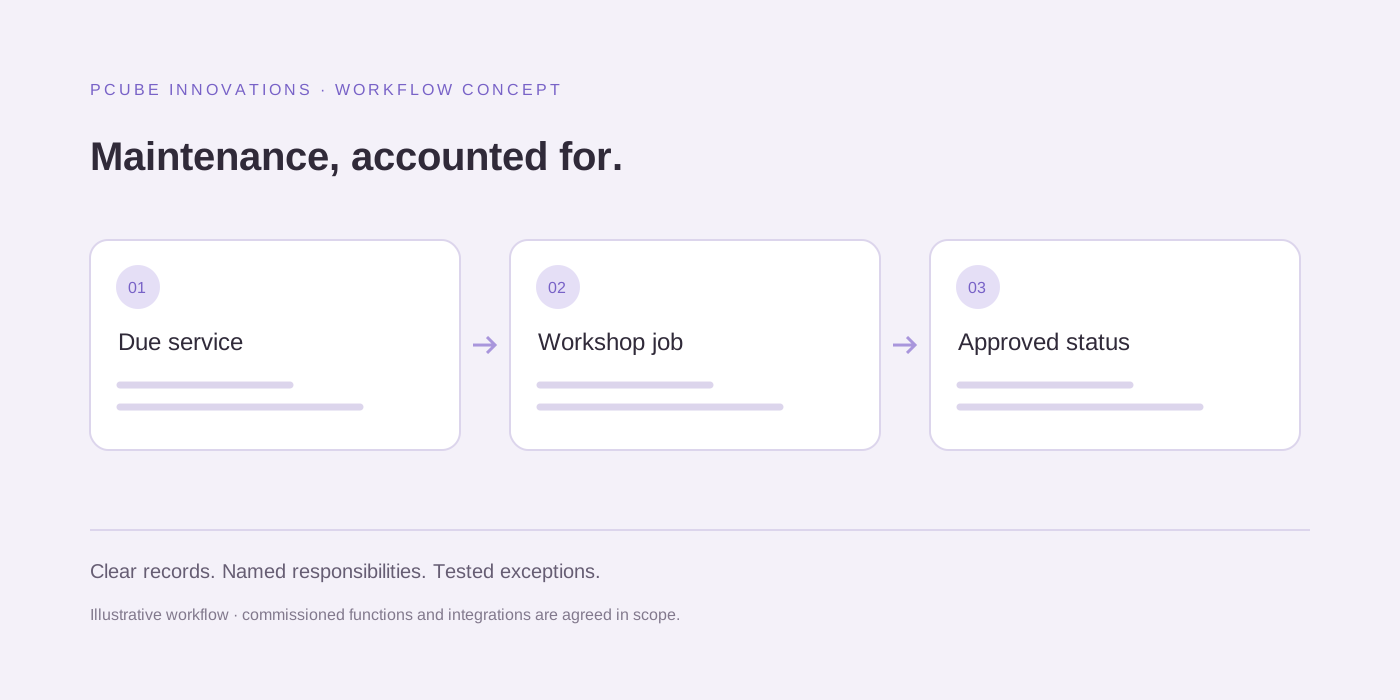
THE BUSINESS PROBLEM
When the current approach gets in the way.
Fleet operators and workshops planning service, defect and maintenance-record workflows.
Service reminders sit separately from vehicle assignments.
Reported faults lack a named owner and a recorded outcome.
Completed repairs cannot be traced to parts and work order records.
A BETTER WAY TO WORK
What this helps you improve.
- Show outstanding maintenance work alongside the vehicle.
- Keep an auditable record of reported defects and actions.
- Use agreed fleet data without assuming every tracker exposes an API.
We agree the practical outcomes with you before development begins, then review the work against that scope.
Tell us what needs to improveWHAT WE CAN DELIVER
Built around the work you need to do.
Custom fleet and truck maintenance software for South African operators. Scope service reminders, defects, workshop jobs, parts and maintenance history.
Due-service rules using approved dates, mileage or engine-hour inputs
Driver defect reports with ownership and follow-up status
Workshop work orders with parts and labour records
Maintenance history, downtime reasons and exports
Approval before a vehicle returns to operational availability
These are capabilities we can scope for your project. Your quotation confirms the exact features, responsibilities and deliverables included.
HOW IT CONNECTS
See how the work moves through your system.
A starting point for discussion. We adapt the sequence to your people, systems and operating rules.
01Record the vehicle and approved maintenance rule02Raise a due service or review a reported defect03Assign workshop work and capture the result04Approve the operational status and retain the history
YOUR EXISTING TOOLS
Keep the systems that already work for you.
We review account access, supported interfaces and provider terms before confirming an integration. The right connection depends on your exact platform and workflow.
Approved telematics interfaces where availableExisting vehicle registers and stock recordsSupported workshop or accounting data exchangeAuthorised reminder channels
Listed platforms are possible integration options, subject to feasibility. No partnership or universal compatibility is implied.
Explore API integrationFROM CONVERSATION TO DELIVERY
A process you can follow.
Requirements, milestones and payment terms are agreed in your quotation. You see the work at defined review points.
- 01
Map the existing task, its users and operational exceptions.
- 02
Confirm record ownership, data access and integration feasibility.
- 03
Prototype the main workflow and agree acceptance scenarios.
- 04
Build the agreed permissions, handovers and user interface.
- 05
Test real examples, failed operations and recovery steps.
- 06
Pilot the release and agree training, handover and support.
PRICING WITH CONTEXT
Start with the release that matters most.
The quotation depends on users, records, workflow complexity, data migration, integrations and support. Discovery establishes the agreed deliverables and milestones. Hosting, hardware and third-party usage charges may be separate; no fixed price is advertised for this system.
Tell us how you work today, what you need to change and which tools you use. We will help identify a sensible starting point.
CONFIDENCE IN THE DETAILS
Know what happens after delivery.
Clear agreements and an organised handover are part of how we work. We establish responsibilities before the project starts.
Ownership in writing.
The agreement defines commissioned software, source-code access, business data exports, licensed components and handover. Third-party services keep their own terms. Confirm ownership and access before approving development.
A defined support plan.
We agree support hours, incident priorities, included fixes, training and recovery responsibilities. Ongoing maintenance and new features require a defined arrangement; round-the-clock or on-site cover is not implied.
Practical communication.
We work remotely with businesses across South Africa. Communication is available through whatsapp, email and scheduled calls, with project updates and review points agreed at the start.
BUSINESS CONTEXT MATTERS
See this in your industry.
Explore the workflows, questions and operational needs relevant to businesses like yours.
BEFORE YOU CHOOSE
Practical guides and reusable resources.
YOUR BUSINESS. YOUR SERVICE AREA.
Remote delivery across South Africa.
We agree discovery calls, review milestones and handover around your team. Explore relevant service areas and how a project can fit your business.
CONNECTED SERVICES
Build on fleet & truck maintenance software.
Explore the services that can support the next stage of your project.
Software
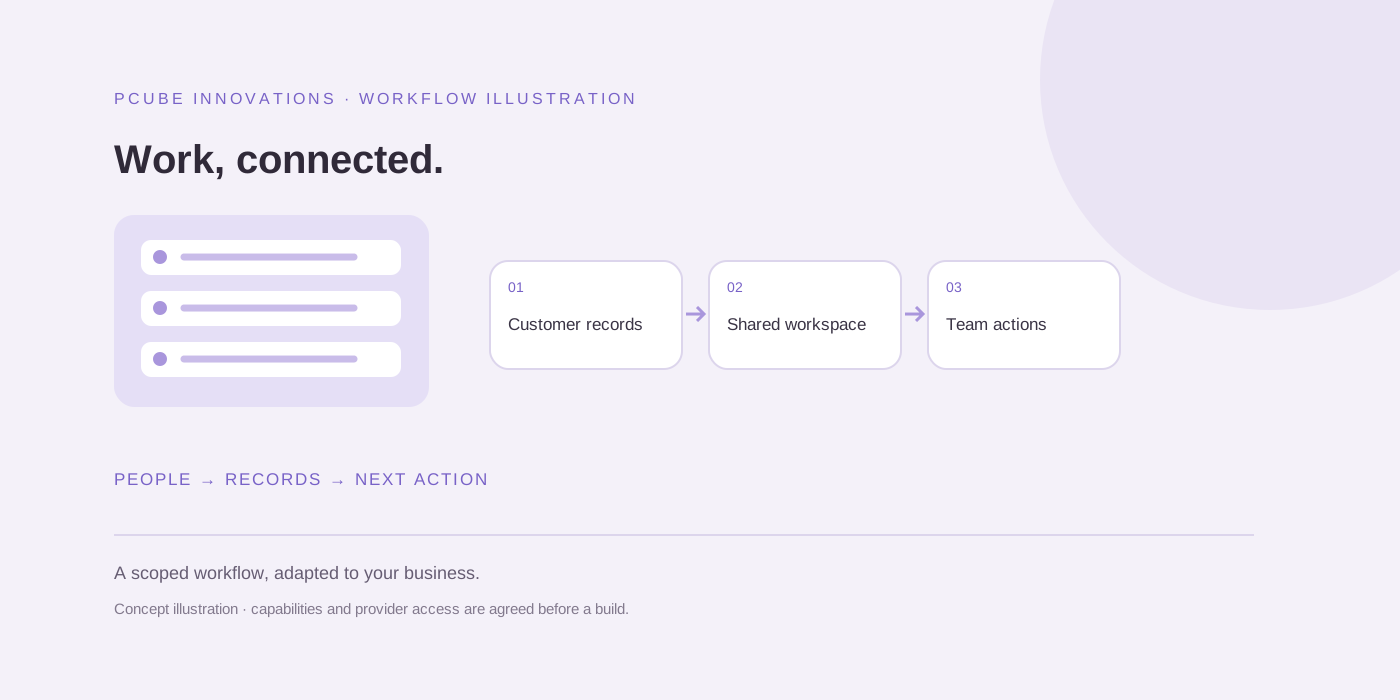
Fleet Management Software
Organise vehicle records, driver assignments and maintenance reminders alongside compatible tracking data.
Explore this service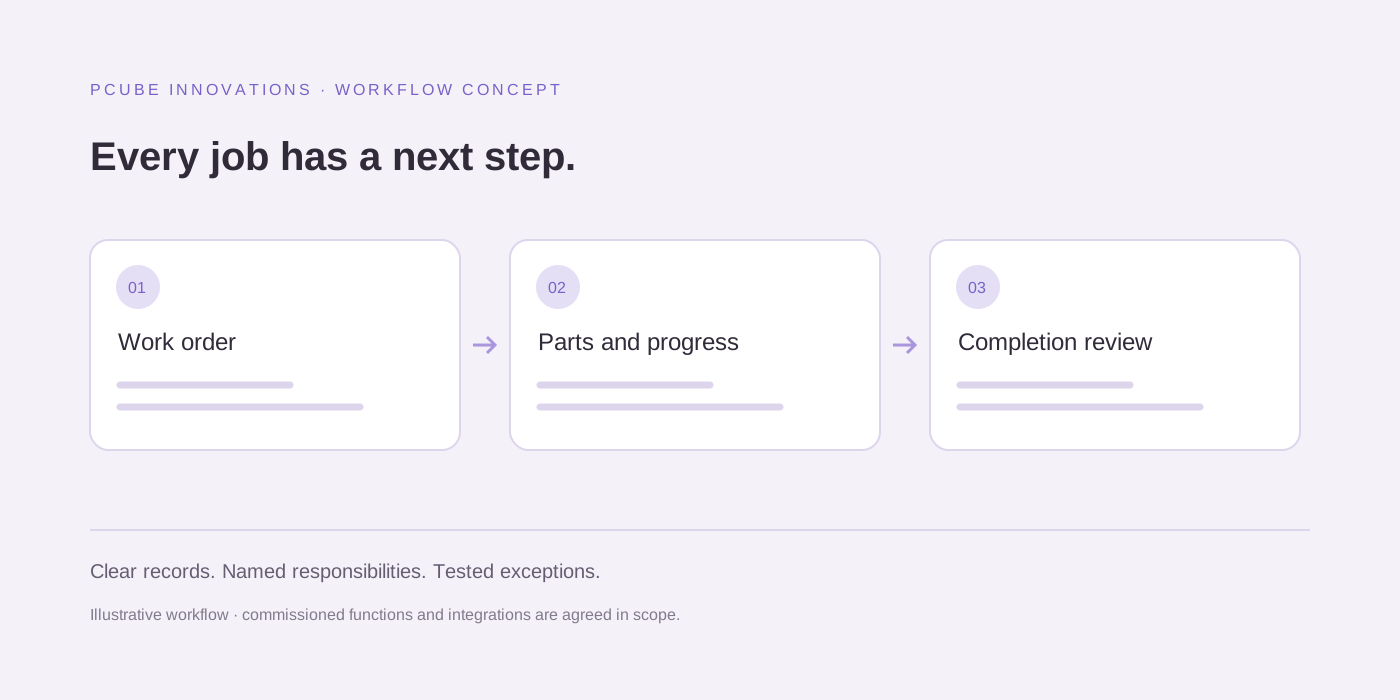
Software
Job & Work Order Management Software
Custom job management software for South African service teams. Connect work orders, scheduling, parts, technician updates, approvals and invoice handovers.
Explore this serviceSoftware
Logistics Software Development
Connect shipment intake, dispatch, delivery updates and customer visibility in one operational workflow.
Explore this serviceSoftware
Inventory Management Software
Track stock movements, locations and reorder needs with a system shaped around how your team handles inventory.
Explore this serviceBEFORE YOU START
Questions about fleet & truck maintenance software.
Useful answers about scope, cost, ownership and ongoing support.
Can we track vehicle servicing and truck maintenance in one system?
Fleet maintenance software connects vehicle records, due-service rules, reported defects and workshop work orders. PCube can build the operational workflow and assess supported telematics inputs. Maintenance schedules come from your authorised fleet process; this software service does not replace technical inspections or establish a vehicle’s roadworthiness.
Can the maintenance system use odometer readings from our tracking provider?
We first check the provider, API permissions, units, update frequency and commercial terms. Manual readings or imports may be an alternative. Stale readings must remain visible so a reminder is not interpreted as a verified current reading.
Is fleet maintenance the same as fleet tracking?
Tracking focuses on location or vehicle activity from supported data feeds. Maintenance coordinates due work, defects, workshop tasks and history. They can share records, but one does not automatically include the other.
Can a fleet of 20–100 vehicles use a phased maintenance rollout?
A phased project can begin with vehicle records, service rules and defect follow-up, then assess work orders and integrations. Pilot a representative group first and compare the support, data and training needs before rolling out to the whole fleet.
What should we budget for this software?
The quotation depends on users, records, workflow complexity, data migration, integrations and support. Discovery establishes the agreed deliverables and milestones. Hosting, hardware and third-party usage charges may be separate; no fixed price is advertised for this system.
What do we own after the project?
The agreement defines commissioned software, source-code access, business data exports, licensed components and handover. Third-party services keep their own terms. Confirm ownership and access before approving development.
What support is available after launch?
We agree support hours, incident priorities, included fixes, training and recovery responsibilities. Ongoing maintenance and new features require a defined arrangement; round-the-clock or on-site cover is not implied.
LET’S BUILD SOMETHING BETTER
Tell us how your business works today.
You do not need a technical brief. Share your goals for fleet & truck maintenance software and we will help define the next useful step.
No technical brief required. Just a conversation.