Define the labels without inventing separate ranking systems
Search engine optimisation covers the technical and editorial work that helps people and search engines understand a website. Answer engine optimisation commonly describes clear question-and-answer content. Generative engine optimisation commonly describes visibility in generated answers and their sources. These are descriptions of work, not certifications or guaranteed placements.
Google says its established SEO practices remain relevant to its AI search features and that no additional requirements or special optimisations are necessary. Other providers have their own retrieval behaviour. A page being crawlable does not establish that any model will cite it.
Make each commercial page useful on its own
State what you offer, who it serves, what is included, the delivery model and how to request a scoped quotation. Explain remote service coverage accurately. An answer about software in Cape Town should not imply an office there or a product module that has not been demonstrated.
Put important explanations in rendered text, use ordinary descriptive links and keep titles, canonical URLs and sitemap entries consistent. Add structured data that matches the visible service, organisation or article. Extra schema labels cannot replace the actual content.
Publish evidence people can check
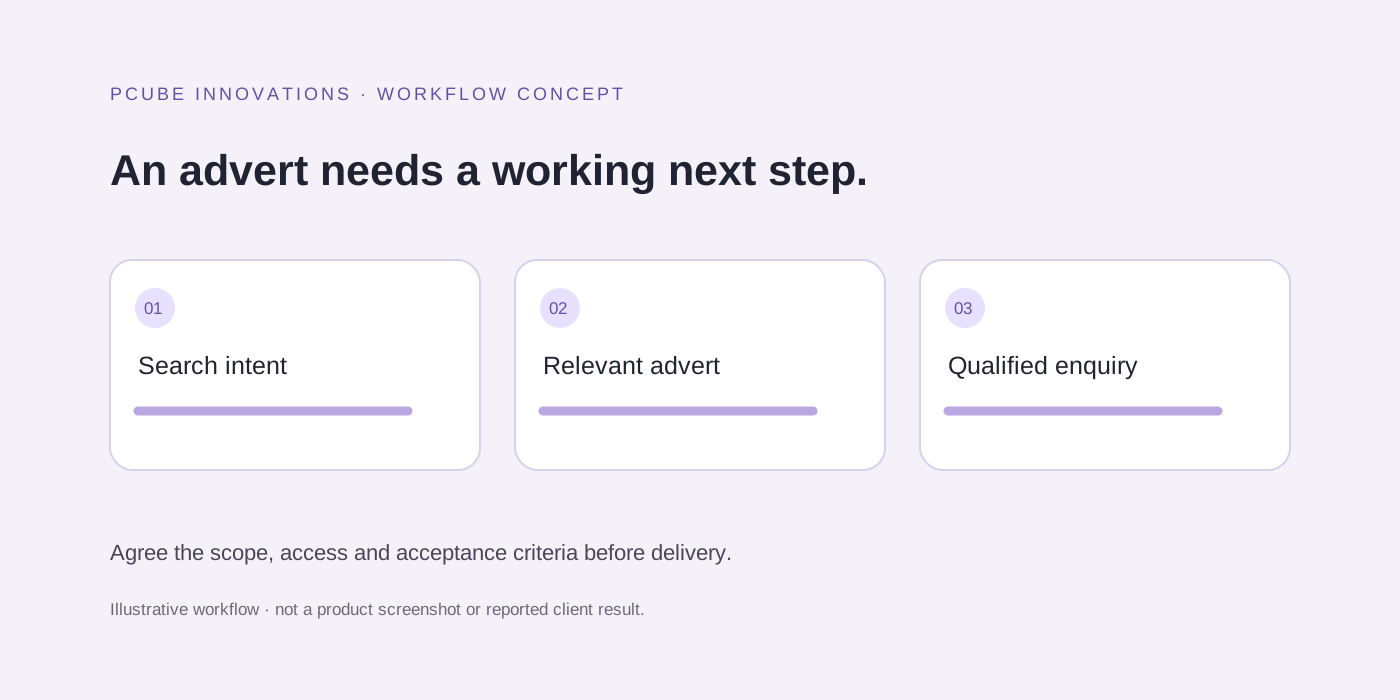
Use approved project screenshots, live references, named sources and dated methods. Separate an illustrative workflow from a measured case study. If you publish a worksheet, explain its fields and reuse terms so another researcher can cite the actual resource.
Do not transform owner-reported rankings into independently verified results. A link opening a search or a chat is a way to investigate, not proof that all users will see the same recommendation. Remove unsupported superlatives rather than repeating them in markup.
Evaluate visibility and enquiries separately
Check crawlability locally and confirm actual indexing later in Search Console. Record the date, query, provider, prompt and source links when manually investigating an AI mention. Generated answers can vary, so keep the observation and its limits attached to the record.
For the business outcome, measure qualified enquiries and completed sales through your own approved process. Monitor which pages help a visitor choose an appropriate service. Avoid promising that a file, acronym or automated submission will force indexing or a citation.
Useful questions
Do AI search features require special schema?
Google says no special schema or additional technical requirements are needed for its AI search features. Use accurate standard structured data that matches visible content.
Can an agency guarantee ChatGPT or Gemini recommendations?
No. Crawlability and useful evidence can support discovery, but third-party retrieval and generated answers are outside an agency’s control.