1. What customer task will the website help complete?
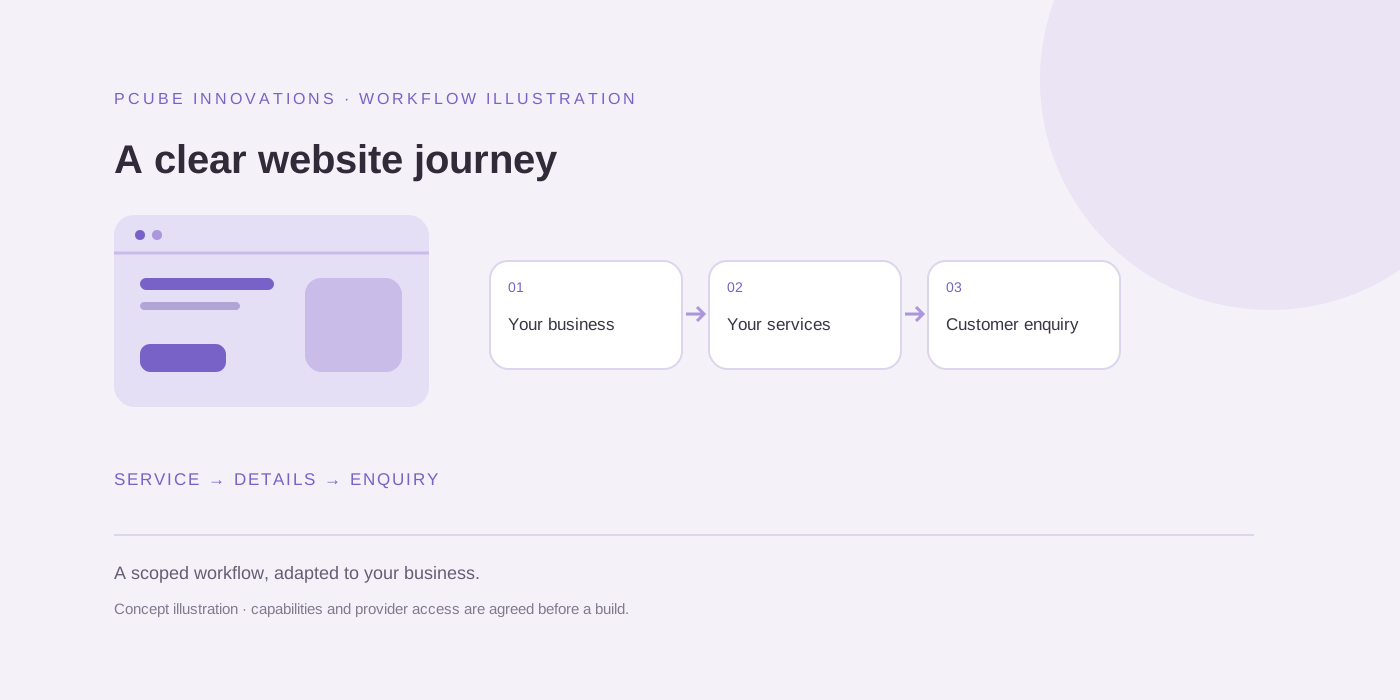
Describe the primary action: requesting a quote, making a booking or buying a product. Ask the developer to explain the proposed route from arrival to completion.
A Johannesburg service business and a Cape Town shop may need different journeys. Use your actual customers and content rather than a generic list of pages.
2. Which deliverables and exclusions are written down?
Request the pages, templates, integrations, revision limits and handover items in writing. Ask who supplies copy, product information and approved photographs.
Record what would trigger a change request. A useful quotation makes the boundary clear enough that both parties can recognise when a new requirement changes the project.
3. Can I inspect relevant completed work?
Open a relevant public example and try its main customer task. Ask which parts the agency delivered and whether the work was a concept, a live implementation or an ongoing engagement.
Ask permission before contacting a reference. A client logo or search screenshot cannot establish every performance claim made about the project.
4. Who owns the domain, accounts and website assets?
Confirm the business will have appropriate access to the domain, hosting, source or export, content and analytics accounts. Clarify any third-party licences and transfer restrictions.
Discuss the handover if the relationship ends. Keep credentials private and request an access inventory rather than a shared document containing passwords.
5. What will I pay after launch?
Compare development fees separately from hosting, domains, maintenance, licences and usage-based services. Check which items renew and who receives renewal notices.
Use the same planning period for each quotation. Do not assume a once-off build includes indefinite edits, support or third-party subscription costs.
6. How will we test mobile use and accessibility?
Agree a list of representative pages, devices and tasks. Include readable text, keyboard use, labelled forms, errors and the ability to complete the enquiry or checkout.
Request evidence of the agreed tests before acceptance. Performance measurements should identify the tested page and conditions; one screenshot of a score is not a complete usability review.
7. What does the SEO work actually include?
Ask about indexable content, titles, descriptive links, canonical URLs, sitemap inclusion and search account ownership. Separate initial setup from ongoing research and editorial work.
If AI visibility is offered, ask what is being measured and how observations are recorded. A promise of a guaranteed Google position or AI recommendation is not a substitute for a documented method.
8. What are the milestones and acceptance criteria?
Agree what the business approves at design, content, testing and launch stages. Identify which inputs can delay the schedule and how changes will be handled.
Use observable criteria such as an enquiry reaching the authorised inbox or a product being editable by the owner. Avoid accepting a project only because every planned screen exists.
9. Who handles support after handover?
Ask how issues are reported, what maintenance includes and how urgent failures are prioritised. Distinguish defect correction, content changes and new functionality.
A Kempton Park business can work with a remote team, but communication arrangements and responsibilities should be clear. Request a scoped proposal once these questions have been answered.
Useful questions
Should I choose the cheapest website quote?
Compare equivalent deliverables, ownership and ongoing costs first. The cheapest quote may suit a small scope, but it needs clear acceptance criteria and exclusions.