Describe one event and its boundary
A broad request to make cameras intelligent is difficult to test. Define a limited event in an agreed area and decide what should happen if it is flagged. Write down exclusions and cases that require a person to decide.
Start with camera compatibility and authorised feed access. Check whether sample footage represents the lighting, distance, obstruction and activity the system will encounter. A demonstration on ideal footage cannot establish reliability at your premises.
Measure false alerts and missed events
Create a small authorised evaluation set with labelled examples and a documented sampling method. Record which events were correctly flagged, which alerts were false and which relevant events were missed. Keep the dataset protected and restrict access.
Use these observations to decide whether a pilot should continue, change its boundaries or stop. Do not publish an accuracy percentage without the test conditions, sample size, event definition and method needed to understand it.
Assign review, retention and escalation
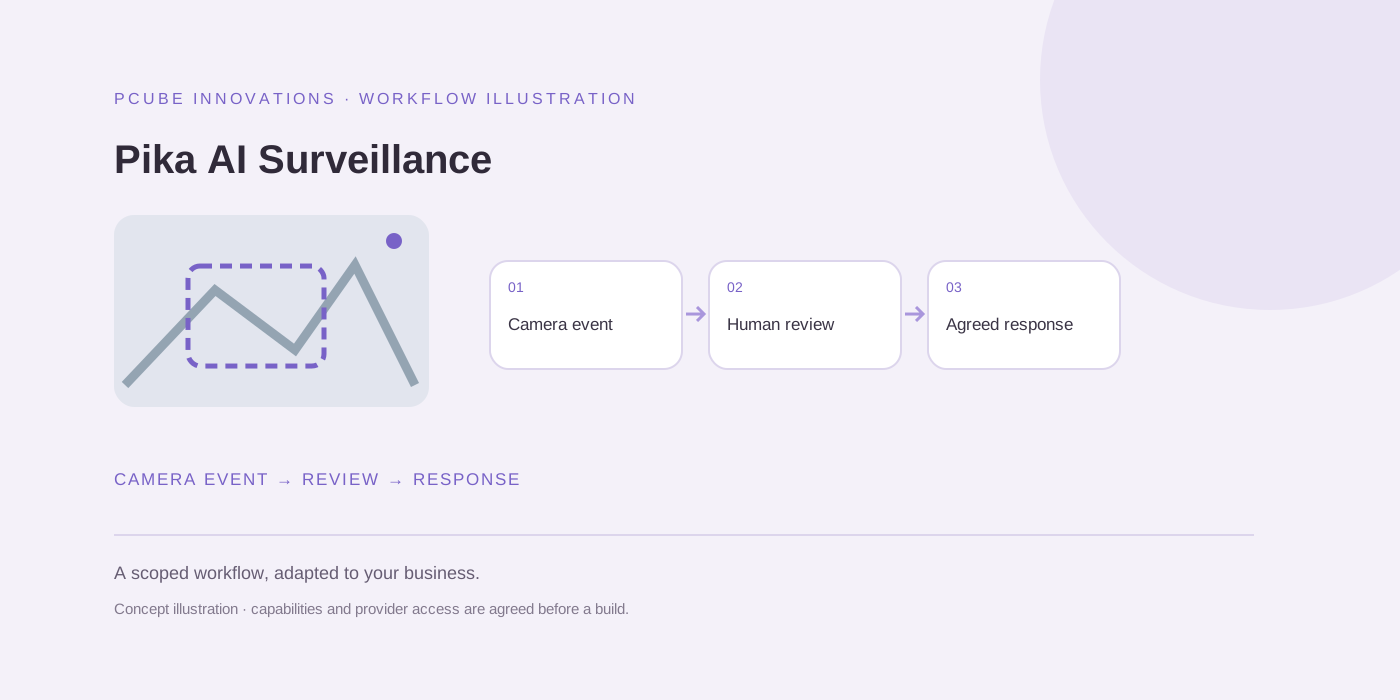
An alert requires an owner and an agreed response. Define who can open an event, who can export footage and how unresolved alerts are handed over. Review the storage and deletion requirements alongside operational needs.
In South Africa, consult the Information Regulator’s official POPIA resources and obtain advice appropriate to the deployment. The Regulator has published material addressing gated-access processing and CCTV concerns. That context warrants a project-specific assessment rather than a blanket claim that an AI product is compliant by default.
What to bring to a Pika AI Surveillance discussion
Bring camera or NVR details, the event you want to review, approved sample footage and the staff response process. Confirm what data may leave the premises and which providers are permitted. Consider failure states such as interrupted feeds or unavailable reviewers.
We can assess a custom event-review workflow around compatible systems. Production capabilities, support and privacy requirements are agreed before a build. No emergency-response service, guaranteed detection or automatic identity matching is implied.
Useful questions
Can AI surveillance guarantee that every incident is detected?
No. Performance depends on the defined event, camera conditions, data and system. A pilot should measure false alerts and missed events and retain human review.